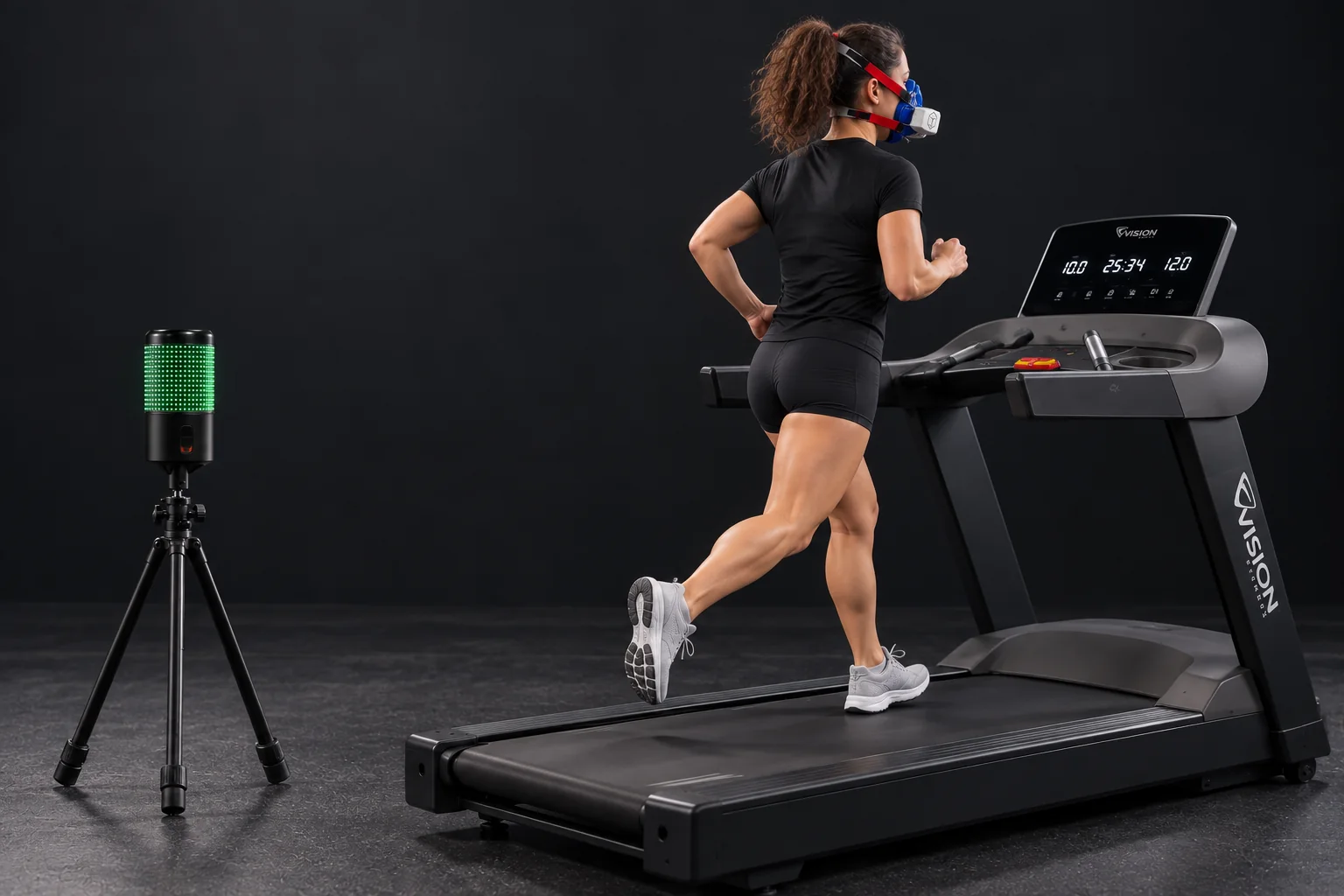
Everyone is fast when they're fresh.
VO2max is the engine that refills your legs between every shift, sprint and battle. We measure it breath by breath, so you can build it.
The size of your engine.
VO2max is how much oxygen your body can use when you're working flat out.
Every sprint burns fast fuel. Your engine is what refills it before the next one. The bigger the engine, the more you get back between efforts, and the longer you stay dangerous.
It's measured in millilitres of oxygen, per kilogram of body weight, per minute. Here's where people land.
Your engine decides the last minute.
A hockey shift is 30 to 80 seconds at about 85% of your max heart rate. Then you have a few minutes on the bench to get it back.
Your fast fuel comes back quickly at first, but it takes four to five minutes to fully refill. The bigger your engine, the more you bring back over the boards.
The more efforts you string together, the more you lean on it. In a single sprint your aerobic system supplies about 10% of the energy. Across repeated sprints, it's 40 to 50%.
Eight weeks. Different games.
Young elite soccer players added intervals twice a week for eight weeks. Then researchers watched their matches.
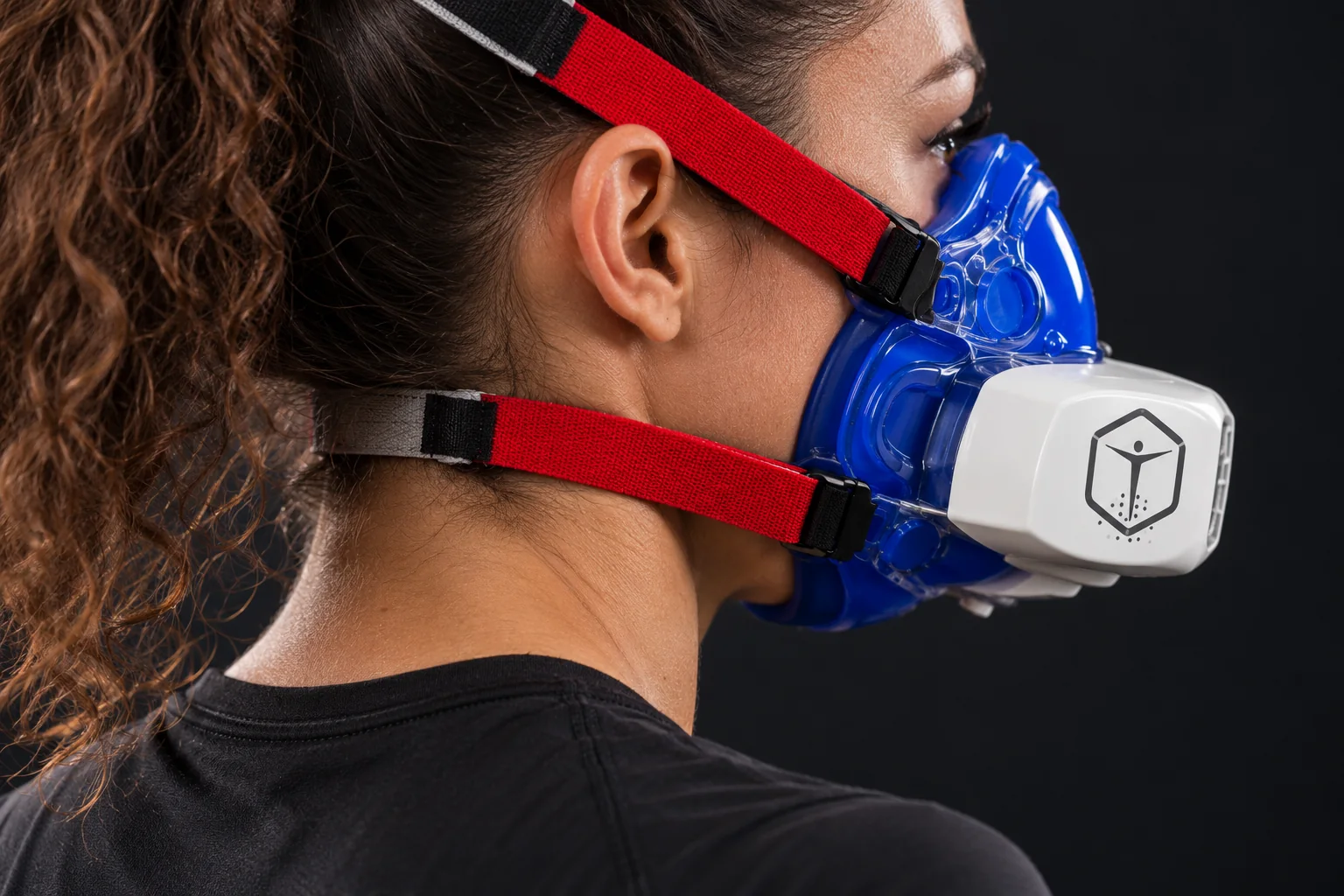
The pros don't guess.
The 2026 NHL Scouting Combine put prospects on a bike for a VO2max test. Most athletes are still guessing.
Your watch
Can be off by 13% on average, and by up to 18 points for one person.
220 minus age
The max heart rate formula can miss your real max by 10 beats or more.
Generic zones
Across 100 people, the threshold that sets training zones landed anywhere from 45% to 74% of VO2max. A chart on the wall can't know where yours is.
Our test
Breath-by-breath gas analysis, heart rate and muscle oxygen while you work to your max. Your zones come from your body, not an average.
Build it. Keep it.
Same program. Different bodies.
Put a group of people on the same training program and some gain a lot while others barely move. That's why we test, train and retest: so your plan follows your body, not a template.
The engine you build for your sport keeps paying you back for the rest of your life.
Your assessment day.
About 90 minutes. Here's how to arrive ready.
Before you come
Skip strenuous training beforehand, so it doesn't affect your results.
Arrive hydrated, rested and fed, in the way that fits your beliefs, your religion and your approach to food. It's for your benefit. You'll perform your best.
Tell us first
If you have an illness, injury or medical condition that could stop you from taking part, tell us before your session. We'll reschedule for when you're fit to test.
If it only comes up on the day or during the test, the test ends. To rebook, we'll need written documentation from a qualified medical professional trained in that area, listing any contraindications and approving you to test.
What to wear
Proper training clothes and shoes. We need to reach your chest for a heart rate strap and your working muscles for a muscle oxygen sensor.
Shoes with removable insoles, so we can fit our smart insoles when the test uses them. Hair tied back, for safety and so the mask seals. Bring any medical devices you need.
During the test
Give it everything you have. If you can't finish a test, you can rebook it for a fee. If a test doesn't give us enough to measure, we'll give you everything the data does show.
After
A written report of your findings, with training direction, within one week.
Price
Prices change, so contact us for current rates.
Stop guessing.
Start knowing.
Book your assessment, or start with a free 30-minute consultation.
Sources
- Vigh-Larsen & Mohr 2022, The physiology of ice hockey performance
- Mohr et al. 2003, Match performance of high-standard soccer players
- Helgerud et al. 2001, Aerobic endurance training improves soccer performance
- NHL.com, 2026 NHL Scouting Combine fitness testing
- Validity of Apple Watch VO2max estimates, Mayo Clinic Proceedings: Digital Health 2026
- Tanaka et al. 2001, Age-predicted maximal heart rate revisited
- Iannetta et al. 2020, A critical evaluation of current methods for exercise prescription
- Milanović et al. 2015, Effectiveness of HIT and continuous training for VO2max
- Coyle et al. 1984, Loss of adaptations after stopping training
- Mandsager et al. 2018, Cardiorespiratory fitness and long-term mortality
- Kaminsky et al. 2015, FRIEND reference standards for cardiorespiratory fitness
- Tønnessen et al. 2013, Maximal aerobic power of professional soccer players
- Bouchard et al. 1999, HERITAGE: response to training; Joyner & Coyle 2008, The physiology of champions